Development of a Solar District Heating Online Calculation Tool (2013)

Submitted by Chris Heron on June 19, 2013

This presentation by Solites introduces modelling for solar district heating. The applied method is based on TRNSYS (Transient System Simulation Tool), software used for simulations for assessing the performance of thermal and electrical energy systems. The presentation also outlines environmental and economic performance criteria for the two models.

Share/Save

Egypt: Stakeholders sign Memorandum of Understanding for Solar Initiative

Submitted by Baerbel Epp on June 19, 2013

At a press conference on 2 June 2013, Khaled Gasser, Chairman of the Solar Energy Development Association (SEDA), Sherif Elwi, Deputy Chairman of the National Bank of Egypt, Hisham Zaazou, Egypt’s Minister of Tourism, and Hussein Ghaleb, Vice Chairman of the Egyptian Hotel Association (EHA) (from left to right), signed a Memorandum of Understanding which is thought to increase the share of solar energy and improve energy efficiency in Egypt´s tourism sector. Journalists from several Arab countries attended the press meeting, which was organised by Egypt’s Ministry for Tourism. The political process was accompanied by the German solar thermal consultant Werner Koldehoff (right).
Photo: Eva Augsten

Share/Save

Needs and Requirements for Successful Solar Thermal Contracting in North Rhine-Westphalia (2012)

Submitted by Chris Heron on June 18, 2013
This presentation by the SO-PRO initiative, a project supported by the Intelligent Energy Europe Programme, introduces the concept of solar contracting from Energy Service Companies (ESCOs) and provides an analysis of its potential in Germany’s North Rhine-Westphalia. ESCOs plan, install and operate an energy supply system based on eg. Solar thermal; while the customer buys the needed energy in the form of hot water. Two models exist in Germany: energy supply and energy saving contracting.
 
Share/Save

France: One Voice for Renewable Heat

Submitted by Baerbel Epp on June 18, 2013

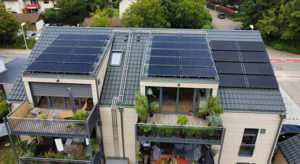
In France, players of solar thermal, geothermal, heat pumps and biomass founded the Alliance Chaleur Renouvelable (translated as Renewable Heat Alliance) in February 2013. "This umbrella organisation speaks with one voice when it comes to the demands and suggestions from the renewable heat industry," says Valérie Laplagne, Initiator of the project and Head of Renewable Energy at Uniclima, the French union for the heating, cooling and ventilation industry. Timing is critical: In November 2012, France launched its energy transition debate, which should result in an important law specifying the new French energy policy by autumn 2013. But after renewable heat players had noticed that renewable energies had been reduced to electricity in the debate, they created the alliance. It lobbies for solar thermal in the retrofit segment, because the solar heat market is currently dominated by new construction (see photo).
Photo: Barraco / Maison NF HQE BBC-Effinergie

Share/Save

Australia: Country to Publish First Solar Air Conditioning Standard

Submitted by Baerbel Epp on June 17, 2013

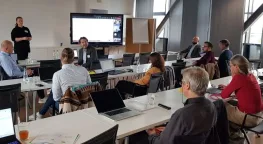
In April, two workshops for solar cooling took place in Asia. At the beginning of the month, a workshop in Singapore focused on the use of solar cooling in tropical regions and gathered around 70 participants from research and industry (see photo). The workshop took place at Cleantech One, which is part of Singapore’s clean technology centre. Cleantech One also hosts the Asia office of Austrian turnkey system provider S.O.L.I.D. and the energy research institute ERI@N of the Nanyang Technological University (NTU). They both organised the workshop together with the International Energy Agency (IEA). A week later, almost 80 solar cooling specialists participated in the Australian Solar Cooling 2013 Conference in Sydney, an event by the Australian Solar Cooling Interest Group (ausSCIG). Solarthermalworld.org has picked out the highlights from the presentations held at the two workshops.
Photo: S.O.L.I.D.

Share/Save

Massachusetts: Renewable Energy Options for Landlords (2011)

Submitted by Dan Fernandez on June 17, 2013

This presentation comes from the Cambridge Energy Alliance which is an initiative of the city of Cambridge, Massachusetts to help city residents reduce their carbon footprints. The presentation lays out the ways solar thermal could be a benefit to landlords in the city for use in their buildings.

Share/Save

Solar Thermal: Solar Hot Water & Solar Air Heating (2013)

Submitted by Dan Fernandez on June 17, 2013

This presentation on solar thermal water and air heating comes from the solar energy company Shift Energy, LLC. It looks at the benefits and applications of solar thermal wall cladding technologies.

Share/Save

Case Studies for Renewable Energy Systems in Hospitality Sector (2012)

Submitted by Chris Heron on June 14, 2013

This presentation by the Energy and Resources Institute outlines several case studies of solar water heating systems and other renewable resources in the hospitality sector of India. The given case studies are part of the “Campaign on Solar Water Heating and other Renewable Energy Technologies in the Hospitality Sector” under UNDP-GEF’s National programme on Solar Water Heating Systems (SWHS), implemented together with India’s Ministry of New and Renewable Energies. 

Share/Save

India: Drop Vacuum Tube Collector Subsidy?

Submitted by Baerbel Epp on June 14, 2013

To protect local solar photovoltaic manufacturers, the Indian government has made it mandatory in its National Solar Mission to use locally made cells and modules. There is no such rule for the solar thermal sector, in which the state subsidises 30 to 60 % of the price of a solar water heater, although a growing number of vacuum tubes have been imported from China. First assessments of the database of the national incentive programme SOLARWHIN show that 75 % of the applications include vacuum tubes and only industrial applications have used flat plate collectors (FPCs). Malaviya Solar Energy Consultancy has asked a few of the leading manufacturers if the subsidies for solar water heaters based on vacuum tubes should be removed, in order to protect the local industry and also to reduce the government’s financial burden with the subsidy scheme.
Photo: Jaideep Malaviya

Share/Save

Case Study: Crow Canyon Medical Center (2013)

Submitted by Dan Fernandez on June 13, 2013

This case study comes from solar thermal manufacturer Chromasun. It reports on a combination solar thermal heating and cooling system that was installed on a California healthcare facility, the Crow Canyon Medical Center.

Share/Save

Pages