Happy birthday EuroSun: 30 years of bringing solar research together
September 22, 2026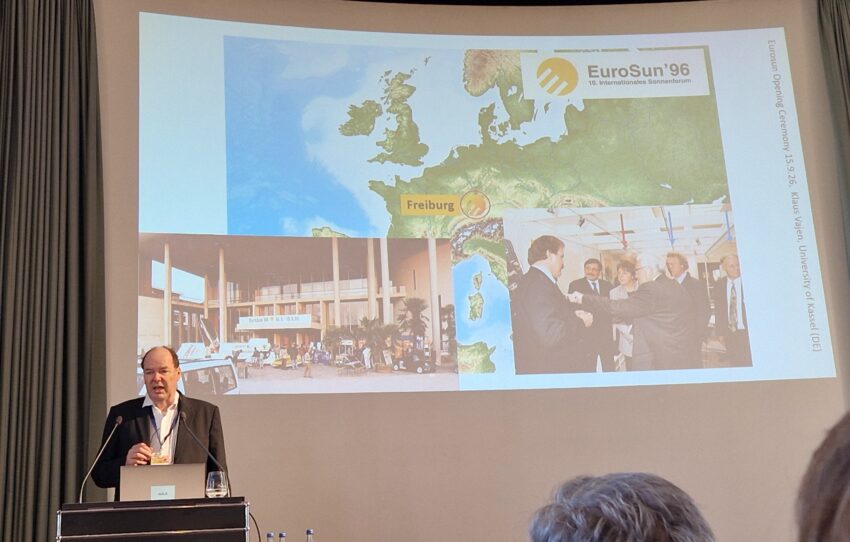
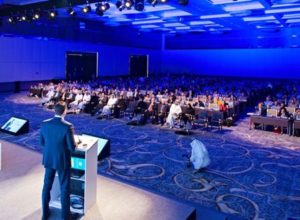
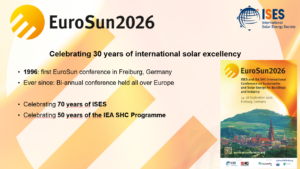
The EuroSun conference of the International Solar Energy Society (ISES) returned to Freiburg last week, exactly 30 years after the first EuroSun was held in the same city in 1996. Some 370 participants gathered for three days of keynotes and technical sessions covering eleven topics. The simultaneous organisation of EuroSun and SolarPACES, together with mutual ticket recognition, made it possible for participants to attend both events. During the opening ceremony, Prof. Klaus Vajen of the University of Kassel and former ISES President looked back on the history of EuroSun and highlighted the excellent long-standing cooperation with its co-organiser, the IEA Solar Heating and Cooling Programme, now renamed to Solar Technologies & Sustainable Heating and Cooling (STSHC) Programme. Photo: Bärbel Epp
Back in 1996, when ISES had only recently moved its headquarters to Freiburg, the city hosted the first EuroSun – a fitting location given its close ties to the development of the solar industry. “In the first year, EuroSun was essentially a German conference with some international guests. This year, however, only around one third of participants come from Germany, and we are proud to welcome almost 20% from outside Europe,” Vajen explained. Canada and South Korea accounted for the largest groups of participants from outside Europe at this year’s conference.
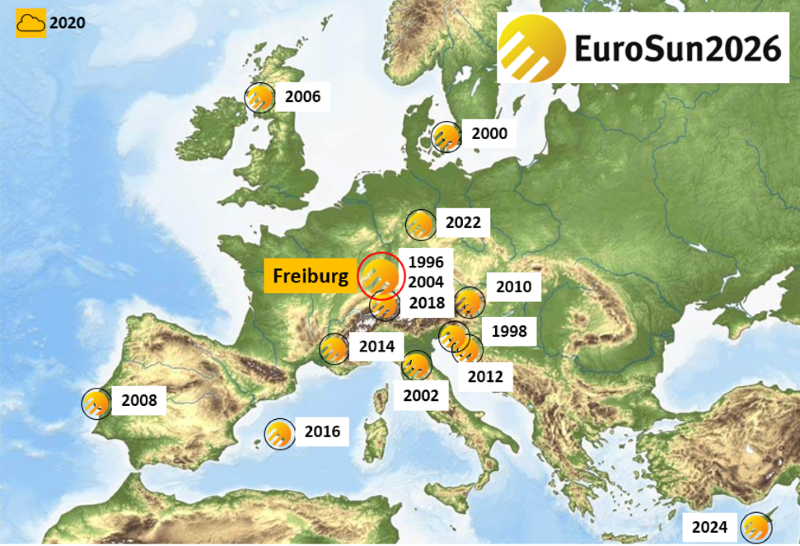
Sites of the EuroSun conferences 1996 to 2026: Freiburg (Germany), Portorož (Slovenia), Copenhagen (Denmark), Bologna (Italy), Glasgow (Great Britain), Graz (Austria), Aix-les-Bains (France), Rijeka (Croatia), Rapperswil (Switzerland), Palma de Mallorca (Spain), Kassel (Germany), and Limassol (Cyprus). In 2020, the conference was held online due to the COVID-19 pandemic. Since 2018, ISES has cooperated with universities to keep conference participation fees affordable. Source: ISES
From solar thermal to system integration: EuroSun’s growing diversity of topics
The topics covered by the papers in the proceedings have changed significantly over the past three decades. Papers specifically focused on solar thermal and solar cooling accounted for around 40% in peak years such as 2014, but made up less than 10% of this year’s proceedings. At the same time, thermal storage, grid/hydrogen, as well as applications in industry and district heating have become increasingly prominent topics in the submitted papers.
Vajen announced EuroSun would continue to sharpen its focus, particularly on sustainable heating and cooling technologies, energy storage and sector coupling.
“The broader range of topics covered by EuroSun fits very well with the scope of our programme, as we have always worked on system level integration and most of the topics currently highlighted,” said Lucio Mesquita, Chair of the STSHC Programme. Several STSHC participants presented results from the programme’s work in conference sessions, including a number of keynote presentations.
EuroSun Conference Chair, Prof. Hans-Martin Henning, supported EuroSun’s broader research agenda with his model of the energy transition, which outlines four characteristic phases on the path to net zero by 2050. The second phase, leading up to 2040, will be strongly shaped by system integration, increased flexibility of energy systems, short-term storages and direct electricity in end-use sectors – areas well covered by EuroSun. The third phase is now gradually emerging, with a focus on carbon-neutral hydrogen and molecular fuels, as well as long-term storage and residual power plants with biomass. “In the final decade before achieving complete carbon neutrality, we will also need carbon dioxide removal and negative-emission technologies,” Henning said.
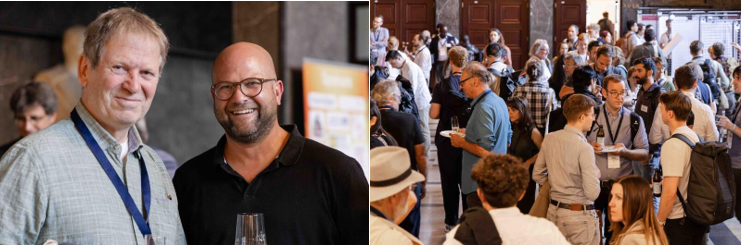
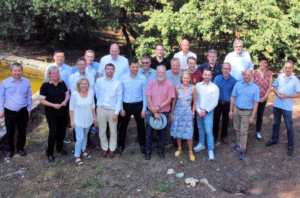
Happy faces from Conference Chair Prof. Hans-Martin Henning (left), former Director of the Fraunhofer Institute for Solar Energy Systems in Freiburg, and Scientific Chair Dr. Korbinian Kramer, Researcher at Fraunhofer ISE.
Photos: ISES
CSP and Solar thermal: Growth and economic potential
The opening sessions of EuroSun were organised jointly with the SolarPACES conference on concentrating solar power, thermal, and chemical energy systems, allowing speakers to alternate between the two conferences and bringing the two communities together. Paolo Frankl, Head of the Renewable Energy Division at the International Energy Agency (IEA), addressed both communities with an online welcome message and an encouraging outlook: “The global concentrating solar power sector will almost double over the next five years, driven by China,” Frankl said.
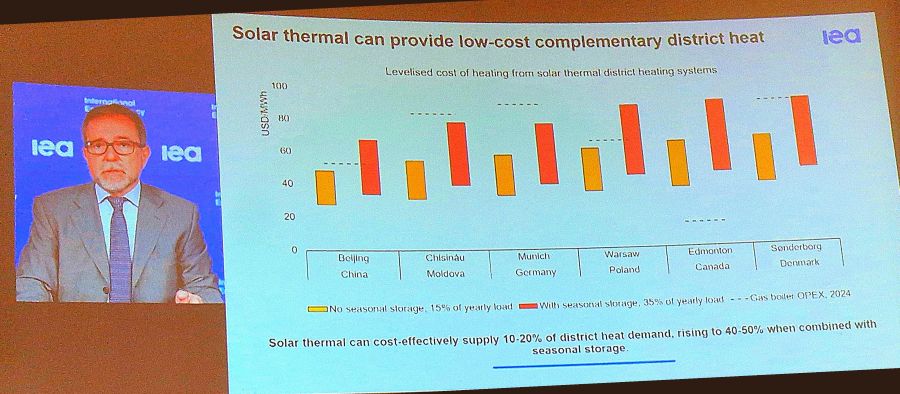
Results of an IEA study on the economic viability of solar district heating at different locations, presented by Paolo Frankl, Head of the Renewable Energy Division at the International Energy Agency. Photo: Bärbel Epp
For solar thermal, Frankl cited results from an IEA study on the economic viability of solar district heating at different locations. According to the study, solar district heating is already economically viable in countries such as China and Poland. In Germany, Poland and Moldova, solar district heating combined with seasonal thermal storage can also be cost-competitive with gas-fired district heating networks. Frankl also stressed that solar thermal systems require relatively few critical raw materials, while further deployment across many applications will still depend on support policies and regulatory frameworks.
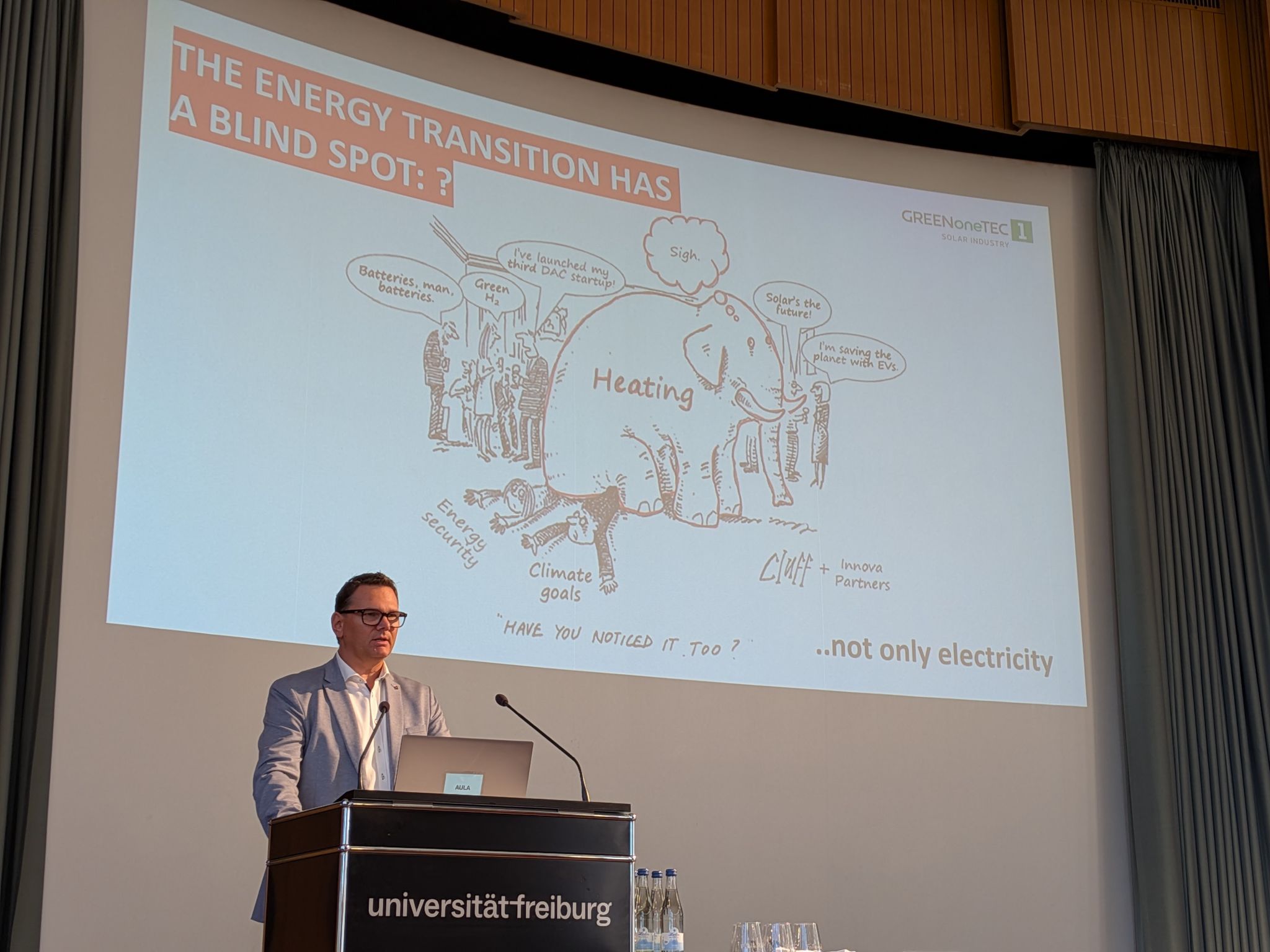
Protecting European excellence in solar thermal was the title of Ingo Lankmayr’s presentation during the industry session organised by Solar Heat Europe. Lankmayr, Head of Sales at Greenonetec, Austria, stressed that “resilience is built, not claimed” and outlined three conditions for solar thermal to play a strong role in delivering affordable and resilient energy in Europe: “people need confidence, installers need planning certainty, and manufacturers need stability.” Photo: Solar Heat Europe
The next EuroSun will take place in 2028, once again as a jointly organised conference by ISES and the STSHC Programme. Several locations have already sent a bid for hosting the event. Vajen’s conclusion was clear: “EuroSun remains highly attractive.”
Websites of organisations mentioned in this article:
EuroSun 2026: https://www.eurosunconference.org/
ISES: https://www.ises.org/
IEA STSHC Programme: https://iea-stshc.org/
Fraunhofer ISE: https://www.ise.fraunhofer.de/en.html
University of Kassel: https://www.uni-kassel.de/uni/en/index.html
IEA: https://www.iea.org/
Greenonetec: https://www.greenonetec.com/
Solar Heat Europe: https://solarheateurope.eu/