Product overview showcases the global evolution of solar air collectors
July 1, 2026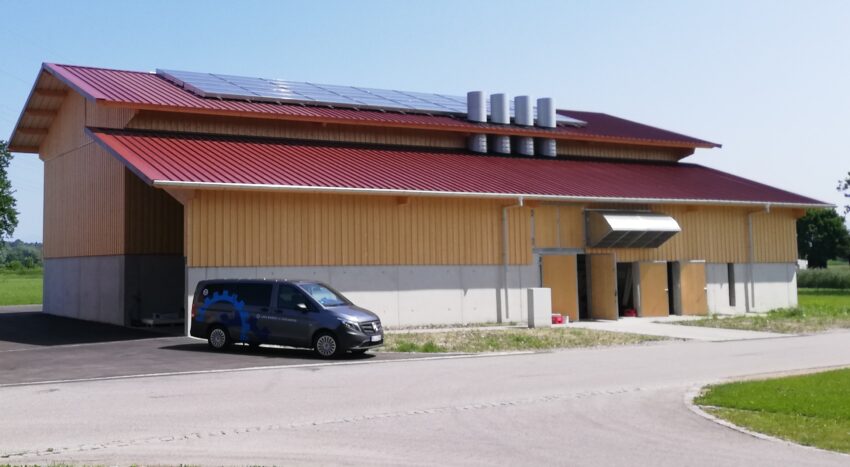
Solar air collectors for building façades were first developed in Canada 37 years ago. Two of the industry’s pioneers are Conserval Engineering and Matrix Energy. Today, solar air collectors are installed around the world. The Renewable Heat and Power Group at CanmetENERGY–Ottawa, part of Natural Resources Canada, recently commissioned a global market survey. The report includes 18 manufacturers and suppliers from 11 countries in a company overview at the end of the publication. The companies are grouped into four categories: cased air collectors, façade-cladding systems, evacuated tube air collectors, and PVT air collectors. The newest companies, which are still offering prototype products, are Sunovate in Australia and Global Green Enviro Solution in India. The photo shows a 200 m² solar air collector system used for drying hay and grain maize in Germany.
Photo: Grammer Solar
Thirty Years of Autonomous Solar Ventilation
German manufacturer Grammer Solar celebrated 30 years of solar-powered autonomous ventilation systems for garden sheds and residential buildings in May this year. Its Twinsolar collector features an absorber enclosed in a sealed casing. Part of the collector surface is covered with photovoltaic cells that power the integrated fan.
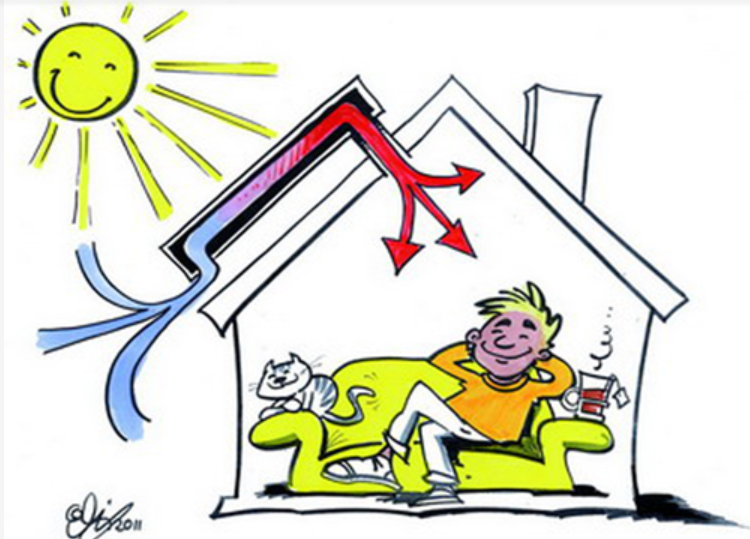
Figure 1: Solar-powered ventilation system. As soon as sufficient sunlight reaches the collector, the integrated fan starts automatically and heats fresh outdoor air to temperatures of up to 40 °C. Cartoon: Grammer Solar
Austrian manufacturer Cona Solar introduced its cased air collectors in 2015. The collectors are built with wooden casings, helping to offset the embodied CO₂ emissions of the metal absorber.
The latest CCS+ generation received the EnergieGenie 2026 award at the Energy Saving Fair in Wels, Austria, in February. The award recognises innovative energy technologies. The jury highlighted two key features. The CCS+ achieves a peak solar yield of more than 700 kWh/m². In addition, the glass is bonded directly to the supporting frame. This allows installers to use vacuum lifting equipment during installation, reducing labour requirements on site.
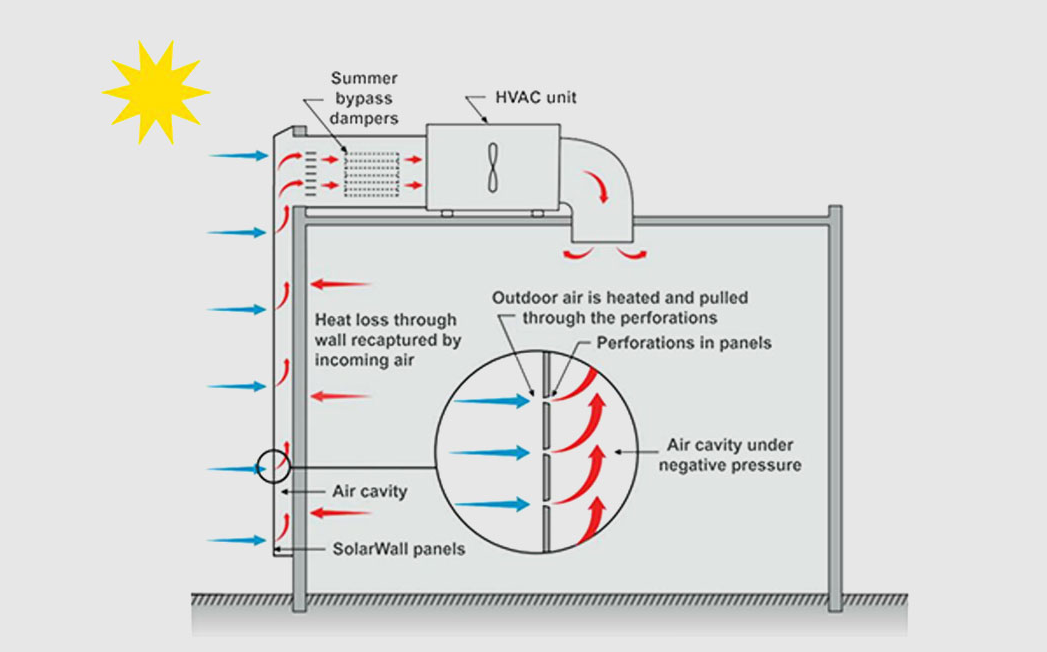
Figure 2: Operating principle of transpired solar air collectors used as façade elements. The technology was originally developed in Canada. Scheme: Conserval Engineering
Canadian air heating façade technology spreads to Europe
The Canadian air heating façade collector system consists of perforated and profiled metal panels mounted a short distance from a building façade. Outside air is drawn through the perforations into the cavity behind the panels. There it is heated before entering the building through the ventilation system.
The collectors are available in two configurations. In the single-stage design, the perforated metal panels form the exterior building façade. In the double-stage version, the absorber is covered with polycarbonate glazing. This protects the absorber from wind-induced heat losses and allows higher outlet air temperatures.
Five companies in North America currently market these systems: ATAS International in the United States and the Canadian companies Aéronergie, Trigo Energies, Conserval Engineering and Matrix Energy.
Solarwall Spain evolved from a former subsidiary of Conserval Engineering into an independent company. It retains a licensing agreement with the Canadian pioneer to manufacture, market and install perforated SolarWall systems in Europe.
Evacuated tube air collectors
The survey identified three German manufacturers and one Chinese company producing evacuated tube solar air collectors. Soletks Solar, formerly known as Jinheng, is one of several Chinese suppliers advertising evacuated tube air collectors online. However, it was the only company that responded to email enquiries and was therefore included in the market overview.
“We have offered an air-based flat-plate collector since 2015, and it has been successfully deployed in a number of clean heating projects,” said Jing Tao, Marketing Director at Soletks Solar. “As market demand increased, we developed a double-pass evacuated tube solar air collector in 2020.”
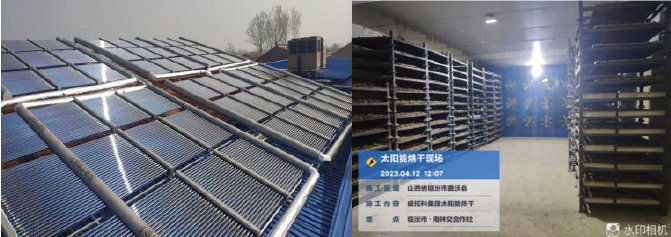
Figure 3: Four fields of double-pass evacuated tube solar air collectors, together with two 30P air-source heat pumps, provide heat at 50 to 70 °C for a 445 m³ agricultural drying facility in Shanxi Province, northern China. Photos: Soletks Solar
German company Tritech Solar offers a particularly distinctive product. Its evacuated tube collector produces both hot water and heated air. Hot water is generated through the manifold, while warm air flows through a separate channel surrounding the manifold. Tritech Solar is also currently developing an air/hot-water collector for solar process heat, which is capable of generating significantly more energy in a relatively small space.
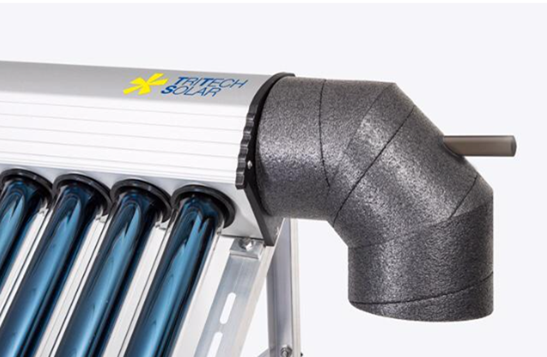
Figure 4: Tritech Solar’s collector simultaneously produces hot water and warm air. The warm-air outlet duct incorporates an integrated water pipe. Photo: Tritech Solar
Fluctuations in PVT air collector business
The fourth category covers three PVT air collector technologies that combine electricity and heat generation in a single product. One example is Australian start-up Sunovate, which has developed a thermal absorber to cool the PV modules evenly. Cooling the PV modules is intended to increase electricity generation. The overview also includes the French company Base Innovation with its Cogen’Air Thermovoltaic Dryer and the Canadian company Conserval Engineering with its SolarDuct system.
Two French companies, Systovi and GSE Integration, are not included in the survey. Both installed large numbers of PVT air heating systems in France until 2021 but have since withdrawn from this market segment.
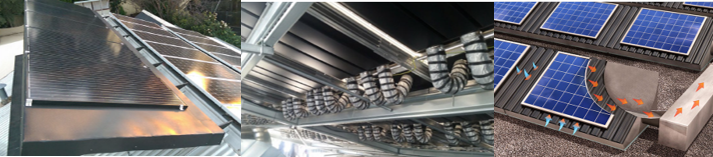
Figure 5: PVT products from different corners of the world (from left): Sunovate, Base Innovation and Conserval Engineering Photos: Sunovate, Base Innovation and Conserval Engineering
The market overview shows that solar air collectors have matured far beyond their original application in Canada. While transpired façade collectors remain the dominant technology, manufacturers are expanding into hybrid PVT systems and evacuated tube designs. Solar air heating is becoming an increasingly versatile option for decarbonising buildings, but also for and agricultural drying and low-temperature industrial heat worldwide.
Websites of companies mentioned in this news article:
Conserval Engineering: https://www.solarwall.com/
Matrix Energy: https://www.matrixairheating.com/
Sunovate: https://www.sunovate.com.au/
Global Green Environ Solution: https://www.ggesindia.com/
Grammer Solar : https://www.grammer-solar.com/de/
Cona Solar : https://conasolar.com/de/
ATAS International : https://atas.com/
Aéronergie: https://www.aeronergie.com/
Trigo Energies: https://trigoenergies.com/en/
Solarwall Spain: https://www.solarwallspain.com/
KWhplus: https://kwhplus.com/
Soletks Solar: https://www.soletksolar.com/
Tritech Solar: https://tritech-solar.com/
Base Innovation: https://www.base-innovation.com/
You find a complete company listing with all 18 manufacturers and suppliers from 11 countries in the pdf below the article.