PVT heat pump systems demonstrate performance factors above 3
October 1, 2026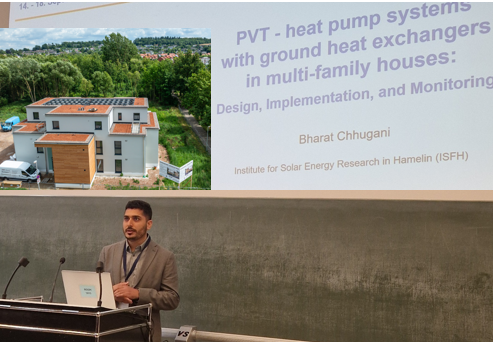
PVT collectors were a major topic at the Eurosun conference held in mid-September in Freiburg, Germany. Three sessions featured presentations on new developments and projects in the field. Particularly valuable were the contributions by Bharat Chhugani from the German Institute for Solar Energy Research Hameln (ISFH) and Laetitia Brottier from French PVT collector manufacturer Dualsun. Both presentations included detailed monitoring results from PVT-assisted heat pump heating systems, demonstrating that seasonal performance factors well above 3 can be achieved. And both organisations are part of the German research project IntegraTE XL. Photos: Bärbel Epp / ISFH
PVT collectors reduce the required ground loop area
Chhugani presented the design and implementation of a heating system combining brine-to-water heat pumps, PVT collectors and ground loops for two multi-family buildings near Hamelin, Germany. The two prefabricated timber buildings have highly insulated building envelopes and contain a total of 18 apartments. “Because of the existing mature trees, only a limited area of the gardens with a maximum of 532 m² per building was available for the ground loops,” reported the ISFH researcher.
During the system design, Chhugani calculated how much the required ground loop area could be reduced by installing PVT collectors on the roofs while still achieving a seasonal performance factor of 3.52 (see Figure 1). The calculations showed that installing 20 m² of PVT collectors per building would reduce the required ground loop area by around 20%. With 40 m² of PVT collectors, the ground loop area could be reduced by as much as 38 %. The developer, Hamelner Wohnungsbau-Gesellschaft, ultimately opted for the 38 % smaller ground loop area of 385 m². The pipe spacing was reduced to 0.5 m, and 48 m² of PVT collectors were installed. The collectors were supplied by German company TWL-Technologies. The aim of the building design was to develop two identical buildings that could be prefabricated in series while operating energetically independently.
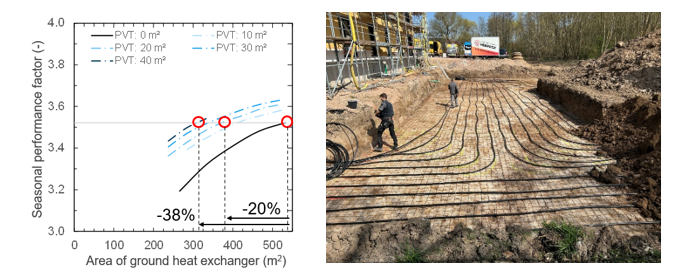
Figure 1: Design variants achieving a seasonal performance factor of 3.52 with a spacing of 0.7 m between the ground-loop pipes. Graphic/photo: ISFH
Monitoring confirms simulated performance
The system design has proved successful in operation. Even during the particularly cold month of February 2026, the system achieved a monthly performance factor of 3.2. This increased to 3.74 in July, the best-performing month recorded so far (Figure 2). Over the six-month monitoring period, the average performance factor was 3.4, coming close to the simulated value of 3.5.
The so-called grid performance factor, which takes into account the electricity generated by the rooftop PV system and used directly by the heat pump by deducting it from the heat pump’s total electricity demand, ranged from 3.53 in February to 9.12 in June over the period analysed. The average grid performance factors in the six months period between February and August was 6.3.
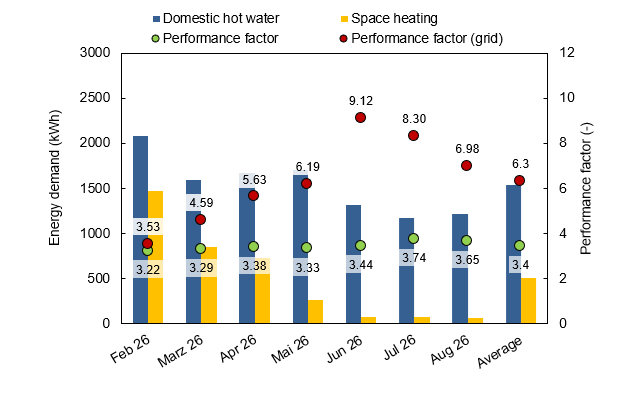
Figure 2: Monitoring data of one of the multi-family buildings from February to August 2026 Source: ISFH
PVT collectors as the sole heat source in the Vosges
Laetitia Brottier presented real-world data from a single-family home in the Vosges in north-eastern France, one of the country’s colder regions (see Figure 3). The 100 m² building was completed in 2020 and is heated by a 9.6 kW (B0/W35) heat pump from the supplier Arkteos from France, which can be operated down to a brine temperature of -20 °C. Its only heat source is an array of 15 Dualsun Spring4 Max 425 with fins. The heat pump supplies a 185-litre domestic hot water cylinder and a 100-litre buffer tank for space heating.
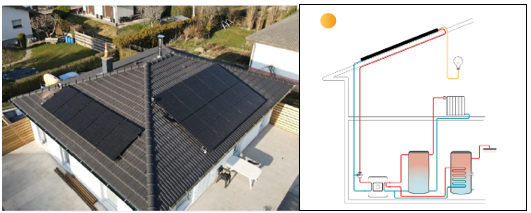
Figure 3: Single-family home in the Vosges with system diagram. The brine circuit from the PVT collectors is connected directly to the heat pump. A three-way valve limits the temperature from the roof to 25 °C, as the heat pump’s evaporator can tolerate temperatures of up to 35 °C. Photo/graphic: Dualsun
Brottier analysed 5-minute averages over the period from April 2025 to March 2026 and summarises the results as follows:
- The monthly performance factor ranged from 2.81 in January to 4.56 in July, with an average of 3.2 over the year (see Figure 4).
- 24.2 % of the electricity consumed by the heat pump was supplied directly by the building’s rooftop solar generation. Taking this self-consumption into account, the grid performance factor increased to 4.23, even though the system has neither a battery nor a controller specifically designed to prioritise PV electricity for the heat pump.
- The system was able to meet 100 % of the building’s heating demand, even at an outdoor temperature of -11 °C. The electric backup heater was never activated during the monitoring period.
- The system’s defrost function was required only in December 2025 and January 2026 and accounted for just 0.5% of the annually heat produced.
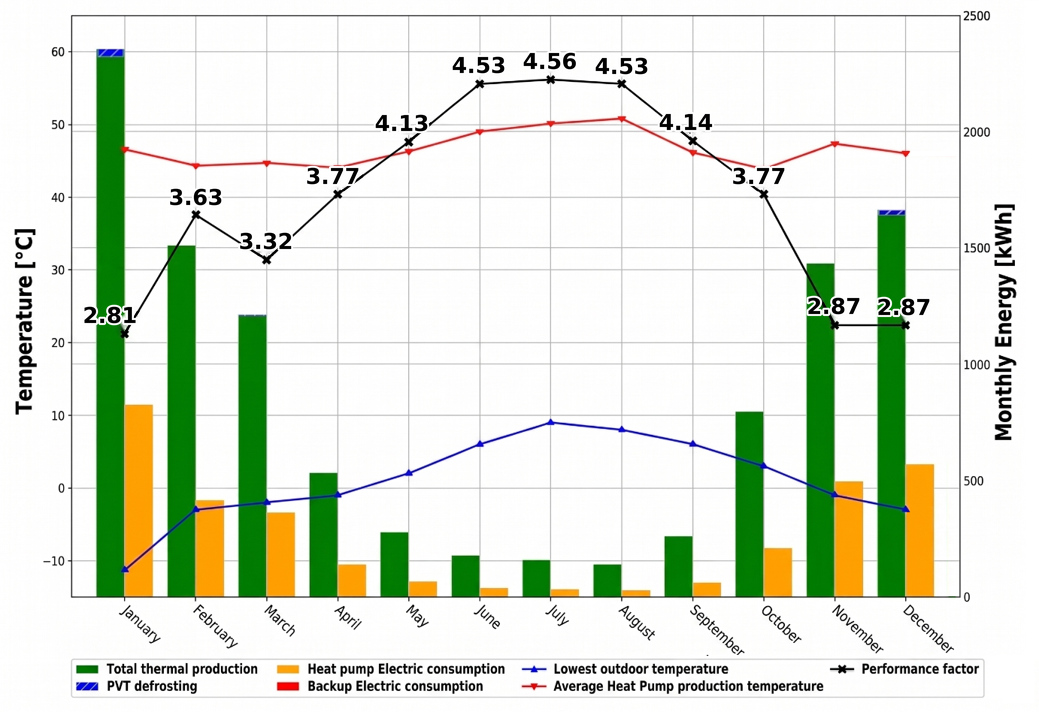
Figure 4: Monthly energy balance of the single-family home in the Vosges: The monthly performance factor ranged from 2.81 in January to 4.56 in July. Graphic: Dualsun
The two closely monitored case studies presented at Eurosun provide practical evidence of the potential of PVT collectors as a heat source for heat pump systems. The projects illustrate two different ways in which PVT can complement or replace heat sources for heat pumps. Where ground-source systems are used, PVT collectors can regenerate the ground and reduce the required ground loop area, which can be particularly valuable where available land is limited. The project in the Vosges demonstrates that PVT collectors can also serve as the sole heat source for a heat pump in a relatively cold climate, with the system covering the building’s entire heating demand without activating the electric backup heater.
Website of organisations mentioned in this news article:
EuroSun 2026: https://www.eurosunconference.org/
ISFH: https://isfh.de/en
TWL-Technologies: https://twl-shop.de/
Dualsun: https://dualsun.com/en/
Arkteos: https://www.arkteos.com/
IntegraTE XL: https://websites.fraunhofer.de/integrate-xl/