IEA SHC Task 70 researchers define the future of daylight modelling
June 26, 2026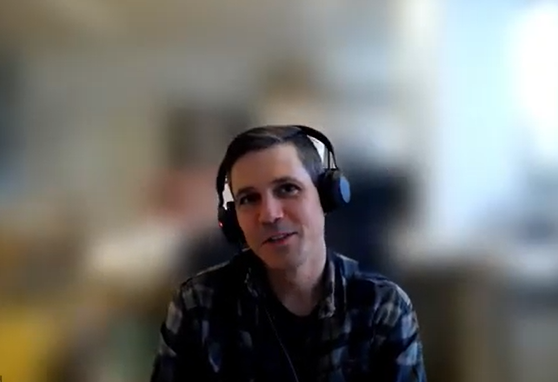
Creating high-performance lighting systems is important not only for saving energy but also for improving indoor comfort and occupant well-being. Complex fenestration systems can control daylight and solar radiation. This improves both visual comfort and indoor thermal conditions. Micro-prismatic materials are one option for optimizing fenestration systems towards low carbon solutions. Scientists from IEA SHC Task 70 on Low carbon, High comfort Integrated Lighting investigated how the performance of daylighting and solar shading systems can be digitally characterized. Their goal was to enable the integration of these materials into simulation tools and to support their use in the ISO/CIE 10916 standard. The experts’ work resulted in a new draft standard ISO/CIE DIS 25176 on the characterization of complex fenestration systems. The work was led by David Geisler-Moroder (see screen shot), Research Associate at the Unit for Energy Efficient Building at the University of Innsbruck, Austria. He presented the results during an IEA Solar Academy webinar in May 2026. The webinar recording and the presentation are available for download here.
Geisler-Moroder led the Task 70 group Subask C together with US expert Eleanor S. Lee where they focused on digitalized lighting and daylighting solutions. One topic investigated during the past three years of Task 70 was the use of micro-prismatic materials in fenestration systems as an example of daylighting systems used in the transparent building skin. Micro-prismatic materials are engineered optical surfaces that transform conventional glazing into smart daylight-management systems. They can help façades and windows distribute daylight more effectively while reducing heat gains and glare. These materials are applied as films laminated to glass or as additional polycarbonate or acrylic shading panels that redirect daylight.
The redirected light, for example, can be reflected from the ceiling deeper into a room. This creates a more uniform distribution of daylight and reduces bright spots near windows.
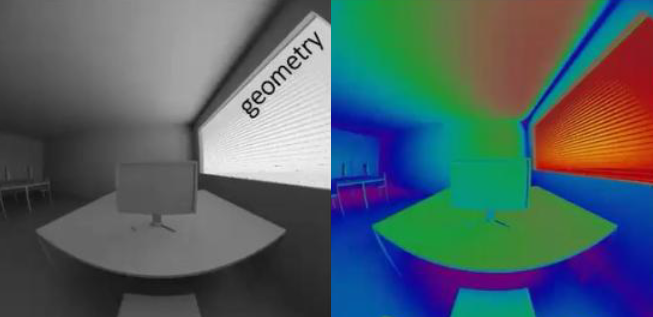
Accurate photometric descriptions of daylighting systems are essential for integrating these systems into simulation tools. Graphic: David Geisler-Moroder
BSDF: A digital description of light scattering
“We investigated micro-prismatic materials that are already available on the market and examined how they can be characterized for use in simulation models,” explained Geisler-Moroder. “This is where the so-called bidirectional scattering distribution functions (BSDF) come into play.” Photometry and characterization for electric lighting is largely standardized. Manufacturers provide luminous intensity distributions for their luminaires. For daylighting and shading systems, however, such standards have been lacking.
The Task 70 researchers therefore followed an approach similar to that used for electric lighting systems. Their goal was to develop a method for daylighting systems which is comparable to luminous intensity distributions for electric lighting.
A BSDF is a mathematical description of how a daylighting or shading system redirects light. It defines how much light leaves a material in every possible outgoing direction. The term “bidirectional” refers to two directions: the incoming direction of the light and the outgoing direction after it interacts with the material. The BSDF therefore describes the light distribution on the interior side as a function of the exterior daylight conditions.
Towards a standard for daylight simulation
Under Geisler-Moroder’s leadership, the digitization team within Task 70 developed generation procedures for BSDF datasets and played a leading role in preparing the specifications for the new ISO/CIE DIS 25176 standard. “We are pleased that the document has already reached the Draft International Standard stage and look forward to its publication within the next year,” said Geisler-Moroder.
The title of the new standard is Light and Lighting – Daylight in Buildings – BSDF Data Generation for Complex Fenestration Systems. The ballot process, during which members of the International Organization for Standardization review, comment on, and approve proposed standards, will begin shortly. Publication of the standard is currently targeted for 20 June 2027.
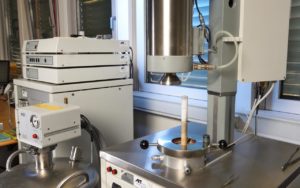
The standard defines how BSDF data should be generated for daylighting and shading systems. It distinguishes between microscopic and macroscopic systems. Microscopic systems can be measured directly using gonio-photometers. These laboratory instruments measure how a light source, glazing system, shading device, or daylighting component distributes light at different angles.
Macroscopic systems have larger representative areas and cannot be measured directly with a gonio-photometer. For these systems, the researchers recommend a combined approach. First, a small sample of the base material of the overall system – for example, the coated aluminum used to make venetian blinds – is measured with a gonio-photometer as it is done for microscopic systems. The resulting material BSDF data are then used in a simulation model to characterize the material of the single slats. The complete system is then simulated e.g., in a ray tracing software to generate the overall system BSDF, where the simulation acts as a virtual gonio-photometer.
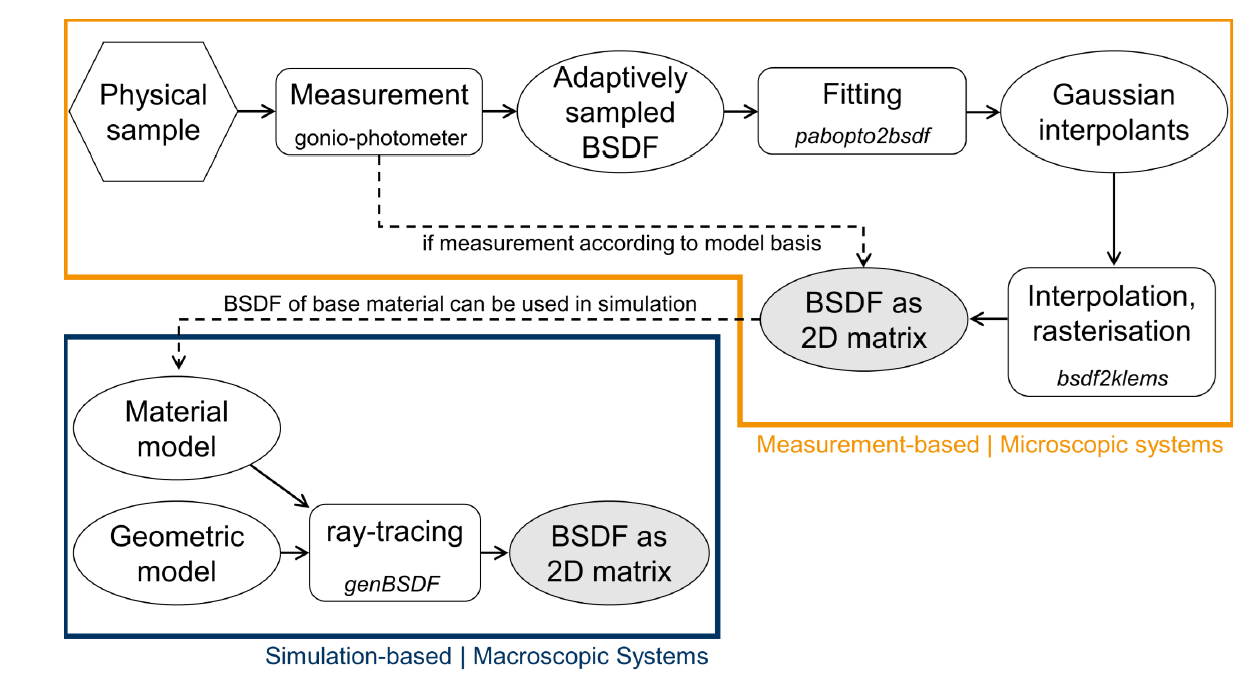
Scheme of the workflow for data generation of microscopic and macroscopic daylighting systems within the new ISO/CIE Standard DIS 10916 Graphic: David Geisler-Moroder
Task 70 concludes in June 2026. By the end of the year, several reports will be published on the Task 70 publications page. Reports from the Digitalized Lighting and Daylighting Solutions working group include:
- Integrated lighting solutions and controls: market and literature state-of-the-art
- BIM – continuous workflow for integrated lighting solutions and underlying data
- Simulation tools for low carbon, high comfort integrated lighting
- Reference rooms for the simulation of low carbon, high comfort lighting solutions
Websites of organisations mentioned in this news article:
IEA SHC Programme: https://www.iea-shc.org/
IEA SHC Task 70: https://task70.iea-shc.org/
Recording of Solar Academy webinar about Task 70: https://www.iea-shc.org/Solar-Academy/webinar/Low-Carbon-High-Comfort-Integrated-Lighting
University of Innsbruck: https://www.uibk.ac.at/en/
Unit of Energy Efficient Building: https://www.uibk.ac.at/en/energy-efficient-building/